


The Nuclear Suppliers’ Group (NSG) is a grouping of 48 nuclear supplier countries to check proliferation of nuclear weapons based on the guidelines laid down for export of nuclear technology and nuclear related products. The 48 nation group includes the big five nuclear weapon states – US, UK, Russia, France and China. NSG was formed in 1974 after India exploded its nuclear device in Pokhran. Since India was not part of NSG, global concern for nuclear technology development and export by a non-member nation, led to the formation of NSG.

When Finance Minister Arun Jaitley started presenting the Union Budget 2016 (third time for him), he had too many things on his mind. This crucial budget had the Herculean task of meeting the needs of both the agriculture and industry. Boosting public spending was also expected to feature in his budget.

The government’s ‘Start Up India Stand Up India’ scheme was initially announced by Prime Minister Narendra Modi on 15 August 2015 and is designed to encourage entrepreneurship amongst the youth, especially in semi-urban and rural areas. The SC/ST categories and women needed specific attention to encourage them to take up self-sustaining entrepreneurship and this scheme addresses that need.

Prime Minister Narendra Modi arrived in Moscow to a red carpet welcome on 23rd December 2015 as part of a two-day official visit to Russia. The same evening President Vladimir Putin hosted a personal dinner for a one-to-one meeting with PM Modi. The tour assumes significance for both countries as they seek to further strengthen economic, military and strategic ties.

The National Herald was an Indian newspaper, under the Associated Journals Ltd (AJL), established in 1938 by Jawaharlal Nehru. The paper ceased operation in 2008, including Urdu newspaper Quami Awaz, citing financial troubles. All the 5,000 shareholders of AJL were Congressmen or Congress sympathizers.

The Prime Minister has just concluded the UK leg of his two-nation tour that began on 12 November and concluded on 14 November. He has now proceeded to Turkey to attend the key G-20 Summit.
The highlights of his UK tour is as below:
Political and Diplomatic impact
The tour has been a great success as it has reinforced India’s status as a rising power, based on the warm reception and endorsement received from the British government, the British Parliament and from all sections of British business houses.

The recent visit by Narendra Modi to Ireland and the US was an important one on several counts. It started with a bilateral meeting on 23rd September with the Taoiseach (Prime Minister in Irish) of Ireland – Enda Kenny. Following the talks, Modi left for New York. He reached New York the next day and attended the UN Sustainable Development Summit. The importance of the summit can be gauged from the fact that it was attended by 150 leaders from across the world. He also got a chance to address the gathering. The Indian Prime Minister also hosted a meeting of G4 leaders with the other countries such as Japan, Germany and Brazil.
Went through a
brilliant article by Sanjay Manjreker in which he has written about MSD's
limitations. Recently, while shooting a TV commercial with
Mahendra Singh Dhoni, I got a chance to pick his brains. I asked him, "What
do you think was the one single reason for your outstanding success as a
sportsman?"
He said, "You have to be honest to
yourself."
I was slightly disappointed with the answer. I
thought it was a lazy response to a question he has been asked many times.But then he went on to elaborate on what he
meant. He said, "You have to be honest about your own ability. Had I tried
to make a career in another sport, I would not have been successful. I knew my
limitations as an athlete, and with those limitations I was reasonably
confident of achieving some degree of success in this sport."
People
who know Dhoni well and have played alongside him also tell me he is very
honest about his limitations - even in the sport of his choosing. He never aspired to be the best
batsman in the world or the best wicketkeeper in the world; he just kept it
real. If you wonder why he did not bat higher up the order as much as he might
have done, perhaps there is a clue there: maybe he thought he was not cut out
to bat at those positions.
Artical
Government to set up 300 rural clusters by 2020: Shyama Prasad Mukherji Rurban Mission
9/20/2015 04:06:00 AM
The Modi Government has launched yet another initiative to bridge the gap between the rural and urban areas of the country. This time, the government has taken the initiative of setting up 300 rural clusters by 2020. This mission is, however, not a new one. It is a replacement of the original PURA mission (Provision of Urban Amenities in Rural Areas) announced by the erstwhile UPA government. It was announced by the Modi government in the 2014-15 budget that the PURA mission was to be replaced with a new mission. But the formal announcement by the name “Shyama Prasad Mukherji Rurban Mission” (SPMRM) was made on 16 August 2015 by the Union cabinet. The new mission is named after Shyama Prasad Mookerjee, the founder of Bharatiya Jana Sangh.
Objective

The decision to include India, along with Pakistan, as permanent members of the Shanghai Cooperation Organisation (SCO) has been announced during the SCO Summit (9-10 July) at Ufa, Russia. The process for formal inclusion into SCO will take place in 2016.
SCO has China, Russia, Kyrgyzstan, Kazakhstan, Tajikistan and Uzbekistan as permanent members, while India, Pakistan, Iran, Afghanistan, and Mongolia have held ‘Observer’ status. Countries included as ‘Dialogue Partners’ are Turkey, Belarus and Sri Lanka.
Artical
Sensex, Rupee Vs Dollar, and Gold Rate – Do they reflect our economic outlook ?
8/29/2015 07:05:00 PM
Media is full of news reports quoting Finance Minister Arun Jaitley that the Indian economy is in a robust state of revival. “Indian economy can double its size in the next three to three and a half years”, claimed another Union Minister Suresh Prabhu. The last month an IMF report claimed that the Indian economy was on the path to be the fastest growing in the world (growth rate estimate – 7.5 percent) for the second consecutive year in FY 2016. Extreme volatility at the Sensex, crashing gold prices and a dipping INR exchange rate tell us a different story altogether. To understand this seeming contradiction, let us take a look at the key indicators of economic growth and see whether the predicted growth of the nation is a mere perception.


What is the significance of 15th August in India
The republic of India gained its independence from the rule of the British on 15 August 1947. Since then, this date of 15 August is celebrated as the Independence Day in India to commemorate its freedom from the 200-year-old British government.
For India, 15 August is a day of her re-birth, a new start. At the midnight of 15 August 1947, the British rulers handed the country back to its Indian leaders, ending a remarkable struggle that lasted years. It was 15 August 1947, the historic date, on which sovereign India's first Prime Minister Pandit Jawaharlal Nehru unfolded the tricolour flag of the nation on the glorious Red Fort. The day is
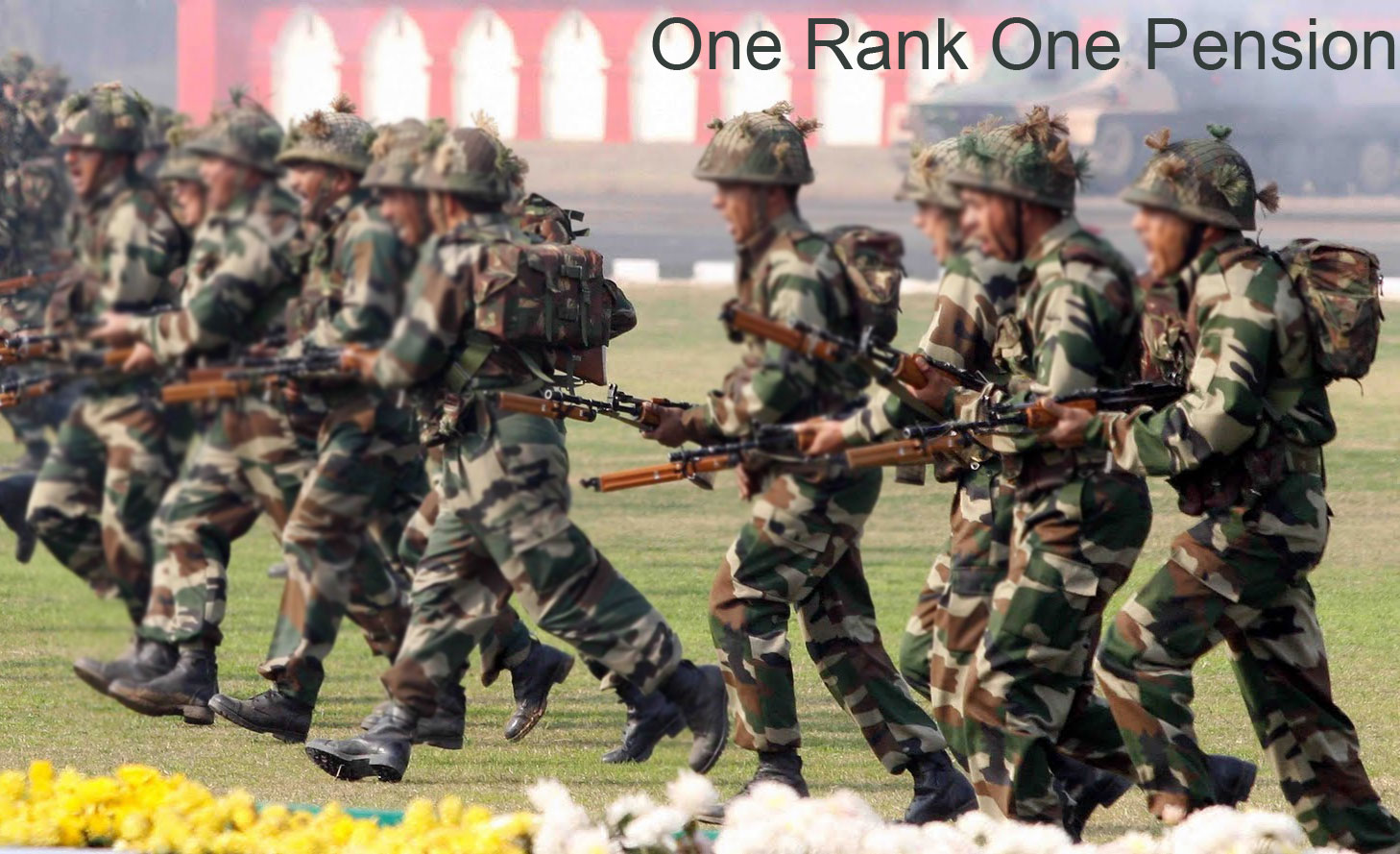
The Indian government has come up with the One Rank One Pension (OROP) in what is being seen as a final effort to get the attention of the defence community of the country – at the present moment there are 14 lakh soldiers and officers serving in various capacities in different wings of the national armed forces. There are also in excess of 25 lakh military officers in India who have retired. Incidentally, this has been demanded for a long time now and has also been promised but till now it had not been implemented. This is also being regarded as an important step taken by the ruling government before the national assembly elections come calling a few months later.

Ever since Prime Minister Narendra Modi took charge at the helm of the Indian government, he has undertaken a number of strategic tours. Be it his US sojourn, or the tour of Canada, France, and Germany, or his trip to China, the Indian PM has become known for his high-profile visits – each with the mission to build economic and strategic ties across the world. PM Modi’s visits are highly publicised by the PMO and have become moot points for NRIs (non-resident Indians) who have shown him an overwhelming support.
In keeping with this “man of missions” image, PM Narendra Modi has now embarked on a visit to five Central Asian countries – Uzbekistan, Kazakhstan, Turkmenistan, Kyrgyzstan and Tajikistan – apart from attending two multilateral summits in Russia. The eight day tour, between 6 and 13 July is intended to boost economic ties in Asia and also focus on strategic defence alliances.
Artical
Vyapam Scam: What is it? Cheat Sheet, Key Accused, Current State of Litigation
7/09/2015 11:47:00 AM
Vyapam Scam
There is something not quite right. Within a matter of days, two crucial people named in the Vyapam scam have died due to ‘natural’ causes. It would not have been alarming if it was just two deaths that may or may not have been linked. However, since these two people join a list of over 25 others accused in the case and have died under various circumstances, it is a reason enough to draw attention of the highest authorities.
Dr Narendra Singh Tomar, a 29-year-old veterinary doctor, had been arrested for his involvement in the scam and was lodged in Indore Jail. He died on 27 June this year after complaining of ‘chest pain’. Another accused, 40-year-old Dr. Rajendra Arya, who was out on bail, died of ‘liver infection’ at a hospital in Gwalior.
The several accused persons who have died have been stated to die due to ‘natural’ causes but the fact that they are all accused in the widening Vyapam scam, is giving the opposition parties enough reason to take on the Shivraj Singh Chouhan-led BJP government in Madhya Pradesh.
The CM has so far been praised for his developmental initiatives in the state, however, this scam has brought attention to the rot that has seeped into the administration.
Genesis of the Scam

“Technology transforms people’s lives. It empowers and connects. From mitigating poverty to simplifying processes, ending corruption to providing better services, vitality of technology is everywhere. It is an instrument of human progress”….Narendra Modi Launching the Digital India programme formally at Indira Gandhi National Stadium on 1 July 2015, PM Narendra Modi said that it is time for India to move to mobile governance, to deliver services and facilities through mobile phones and the Internet. Digital India is an ambitious programme of the Government of India to empower Indians through the electronic and on-line media, to create a country wide digital infrastructure to serve the people of the country.
What comes under Digital India?

Greece has reached breaking point in its relations with Europe with 30 June being the last date by which Greece has to repay the €1.6 billion loan installment due to IMF. With Alexis Tsipras, the young Prime Minister of Greece, shutting all banks for six days and freezing trading in the stock exchange, Greece has effectively closed all chances of averting the default. In fact, on 29 June itself, Greece indicated that it will not be making the due payment thereby sealing its fate as a defaulter and once again setting the European and global economy on an uncertain future.
Earlier, Alexis Tsipras tried to negotiate with the European Central Bank for an extension of the debt repayment deadline but was turned down. In a move surprising all, the Greek PM has called for a referendum on Sunday, 5 July inviting the people to vote in favour or against further austerity measures. A ‘NO’ vote could result in Greece exiting the EU, unless there is a last minute understanding between the government and lenders, which seems very unlikely at this stage, given the statement by Christine Lagarde of the IMF that the government in Greece has had its opportunity and no further extension of the loan repayment period will be granted.

When Greece joined the euro in 2001, confidence in the Greek economy grew and a big economic boom followed. But after the 2008 financial crisis, everything changed. Every country in Europe entered a recession, but because Greece was one of the poorest and most indebted countries, it suffered the most. The unemployment rate reached 28 percent in 2013, worse than the United States suffered during the Great Depression.
If Greece wasn't in the euro, it could have boosted its economy by printing more of its currency, the drachma. This would have lowered the value of the drachma in international markets, making Greek exports more competitive. It would also lower domestic interest rates, encouraging domestic investment and making it easier for Greek debtors to service their debts.
But Greece shares its monetary policy with the rest of Europe. And the German-dominated European Central Bank has given Europe a monetary policy that's about right for Germany, but so tight that it has thrust Greece into a depression.
So Greece is squeezed between a crushing debt burden — 177 percent of GDP, about twice the level in the United States — and a deep depression that makes it difficult to raise the money it needs to make its debt payments.
For the last five years, Greece has been negotiating with European Commission, the European Central Bank, and the International Monetary Fund (dubbed "the Troika") for financial assistance with its debt burden. Since 2010, the Troika has been providing Greece with loans in exchange for tax hikes and spending cuts.


